ServicesRoof Replacement
Roof Replacement in Independence, KY, With Every Stage on Record
When your roof can't be patched anymore, we strip it to the wood and build it back properly. Along the way you get photos of the old layers coming off, any soft boards we find, the new underlayment and flashing, and the finished roof.
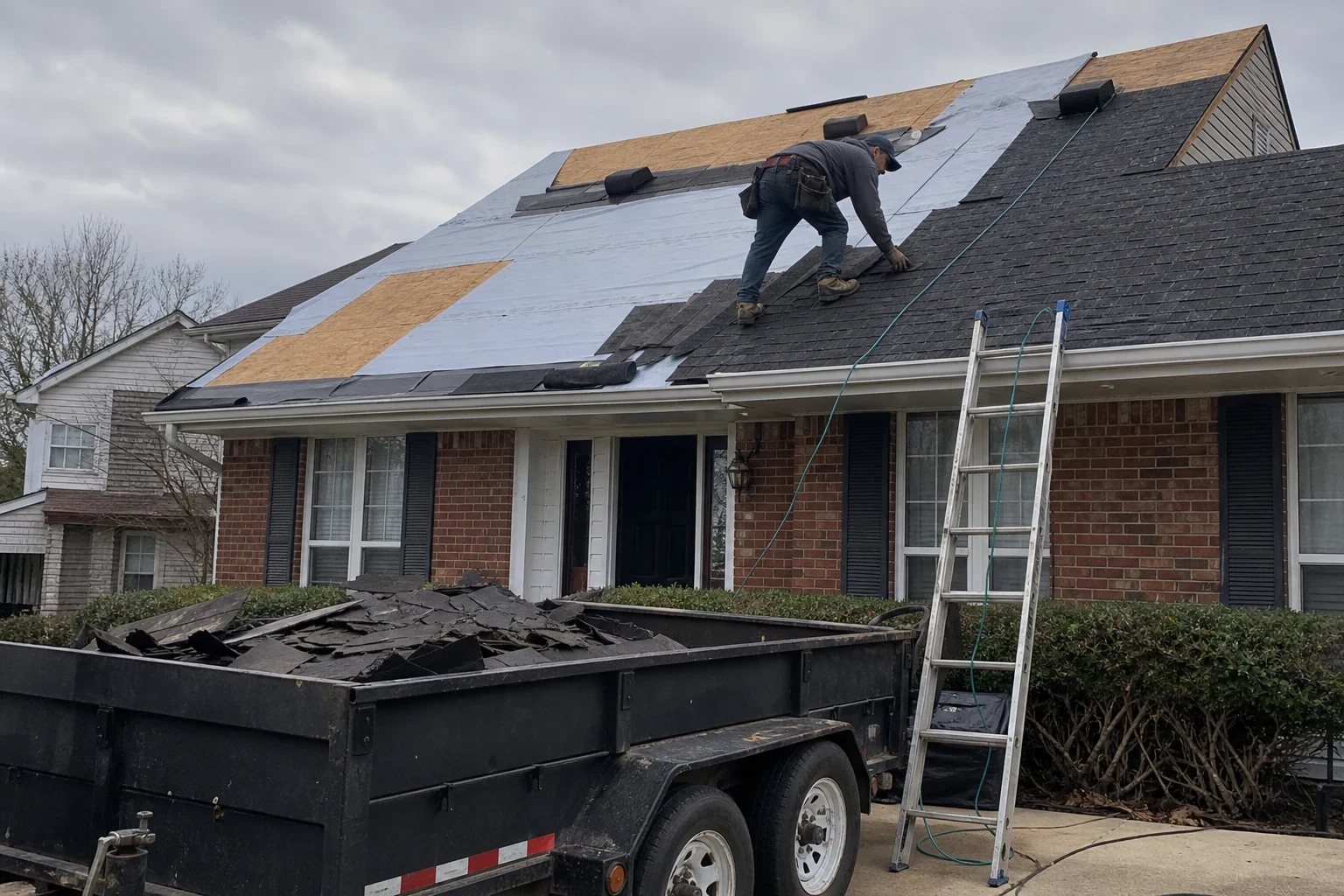
Knowing when replacing beats repairing
Repairs work well until the roof as a whole wears out. When most shingles have shed their granules, the wood underneath has softened, or a new drip turns up each season, you end up paying for fix after fix on a roof that's finished.
That's why we begin with a free roof inspection and an honest answer. If a repair would still give you several good years, we'll tell you and point you to roof repair. If not, we show you the pictures that explain why, and the choice stays with you.
Freeze and thaw cycles through a Northern Kentucky winter are hard on eaves and valleys, where ice dams can force meltwater under shingles, so we give those areas extra care on every new roof.
What goes into your new roof
Everything stripped to bare wood
Old shingles and felt come off completely. We don't stack a new layer on top. Seeing the bare boards lets us fix what's wrong and gives the new shingles a flat, sound base.
Decking repaired where it's failed
Boards that are rotted, soft or peeling apart get marked and swapped out. You see each one in the record before it's covered, so the charge matches the work.
Underlayment and ice barrier
Synthetic underlayment covers the full deck. Ice and water shield goes along the eaves, through the valleys and around pipes and chimneys, the places water backs up first.
Fresh flashing and vents
Step flashing, chimney flashing and pipe boots are replaced, not reused with worn metal and cracked rubber. Vents are set so your attic can breathe, which helps shingles last and cuts down on winter condensation.
Drip edge and shingles
Drip edge goes on at the eaves and rakes, then shingles are nailed to the manufacturer's pattern so they hold in wind.
Cleanup and your finished record
A magnet sweep picks up stray nails, the debris leaves with us, and you receive the full photo set from tear-off to the last ridge cap.
Signs your roof may need replacing
Bald or curling shingles
Granules collecting in your gutters and shingles cupping at the edges mean the asphalt is drying out. Once that's widespread, spot repairs won't keep up.
Stains turning up in several rooms
A single drip can usually be fixed. Water marks in different rooms, or a patched spot that starts leaking again, tend to mean the underlayment has given out across the whole roof.
A sagging or spongy roofline
Dips between rafters or a soft feel underfoot point to wet decking. The only way to reach it is to take the shingles off.
Daylight or damp in the attic
Light through the boards, frost on nail tips in winter or a musty smell all tell you moisture is getting in.
An asphalt roof over 20 years old
Many asphalt roofs are near the end of their life by then, especially after years of hot summers and icy winters. A free roof inspection tells you how much time yours has left.
How the job runs, start to finish
- 1
Inspection and findings
We walk the roof, look in the attic and capture what we find. You get those images with a plain explanation of what needs replacing and why.
- 2
Written estimate and scheduling
Your estimate lists tear-off, decking, materials and flashing line by line. We pull the permit where one is required and pick a date with you.
- 3
Protecting your home
Before anything comes off, we cover shrubs and flower beds, lay tarps along the walls and place the dumpster where you'd like it.
- 4
Tear-off and install
We record the bare deck, each board we replace and each layer as it goes down, so nothing disappears under new shingles. Many homes are finished in one to two days, weather allowing.
- 5
Final walk and cleanup
The yard and driveway get a magnet sweep, gutters are cleared of debris, and we go over the finished roof together. If you can't be there, we send pictures of the completed work instead.
What affects the cost of a new roof
We can't give a fair number from the street, because size and condition differ from house to house. Once we've been on the roof, your written estimate breaks the job into its parts. If tear-off reveals bad decking, we photograph it and check with you before replacing it.
- Roof size and pitch
- Price follows square footage, and steep roofs take more time and safety gear to work on.
- Layers to remove
- Some houses already carry an older roof hidden beneath the current shingles. Every extra layer means more hours of prying and scraping, plus more weight to haul away.
- Decking condition
- Rotted boards are the one cost no one can spot from the ground. The record shows exactly how much was replaced.
- Materials you choose
- Architectural shingles, upgraded underlayment or added ventilation each change the total.
- Chimneys, skylights and valleys
- Each one needs extra flashing and careful hand work.
Roof replacement questions
Something not covered here? (859) 695-2073
Can you put new shingles over my old ones?
Some codes allow a second layer, but we recommend a full tear-off. Laying shingles over an old roof hides the wood we need to check and puts extra load on your rafters, and new shingles sitting on a lumpy base tend to wear out sooner. Tearing off is the only way to find soft wood and show it to you before it's covered for another couple of decades.
Do I need to be home during the replacement?
No. Many homeowners go to work as usual. We'll ask you to move cars out of the driveway and take fragile things off inside walls, since hammering can shake them loose. If you're away, we send pictures so you can see how it's going.
What happens if it rains in the middle of the job?
We watch the forecast and only open as much roof as we can dry in that day. If weather turns, exposed areas get underlayment or tarps before we leave, so your home stays dry overnight.
Could my homeowners insurance cover the replacement?
It depends on the cause. Damage from wind or hail is often covered in part or in full, while age and ordinary wear usually aren't. Our photos give your adjuster a clear record of the roof's condition, and the Storm Damage Repair page walks through how claims typically unfold. Coverage is the adjuster's decision, not ours.
When is the best time of year to replace a roof?
Spring through fall is ideal because shingles seal best in warm weather. We can work on mild days in cooler months, but if your roof isn't leaking yet, planning ahead gives you more choice of dates.
Can you replace my gutters at the same time?
Yes. If your gutters are sagging or pulling away from the fascia, swapping them right after the new roof goes on saves a second setup. Our Gutters page covers what that work includes.
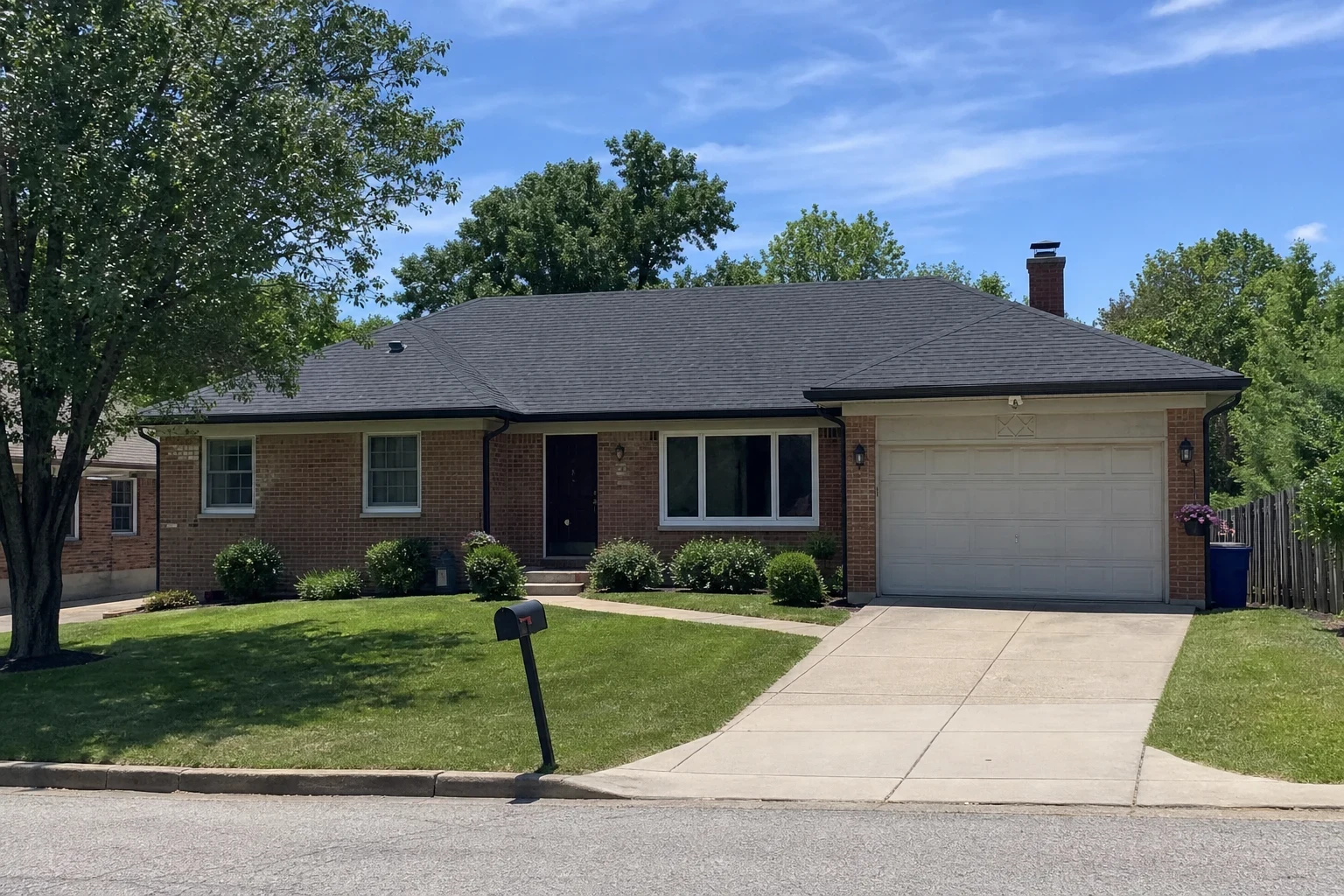
See what your roof needs before you decide
We'll inspect your roof, show you what we find in photos and talk through repair or replacement in plain words. Then you choose.